

Keyword Research for Beginners: Finding the Right Words to Grow Your Blog
- June 19, 2026
- Uncategorized
If you want your blog to grow, you need readers. And to get readers, your blog must show up on Google when people search for topics you write about. That’s where keyword research comes in.
Keyword research is the process of finding the words and phrases people type into search engines. When you use these words naturally in your blog, Google understands your content and shows it to the right audience.
This guide explains keyword research in plain language and shows you how to find the right words to grow your blog.
What Are Keywords?
Keywords are simply search terms. For example:
- “Best coffee shops in Jaipur”
- “How to start a blog”
- “Beginner SEO tips”
When you include these words in your blog, you increase the chance of appearing in search results.
Beginner tip: Think of keywords as the bridge between your blog and your readers.

Why Keyword Research Matters
Without keyword research, you might write great content that nobody finds. With keyword research, you:
- Discover what people are searching for.
- Write content that matches their needs.
- Increase your chances of ranking on Google.
- Grow traffic and build authority.
Step 1: Brainstorm Topics
Start with broad topics related to your blog.
Examples:
- If your blog is about fitness: “workouts,” “nutrition,” “weight loss.”
- If your blog is about travel: “budget trips,” “packing tips,” “best destinations.”
Beginner tip: Write down 5–10 topics you want to cover.
Step 2: Use Free Keyword Tools
Several free tools help you find keywords:
- Google Search Suggestions: Type a word into Google and see what auto‑completes.
- AnswerThePublic: Shows questions people ask online.
- Ubersuggest: Offers keyword ideas and search volume.
- Google Keyword Planner: Free inside Google Ads.
Beginner tip: Start with Google Search Suggestions. It’s simple and effective.
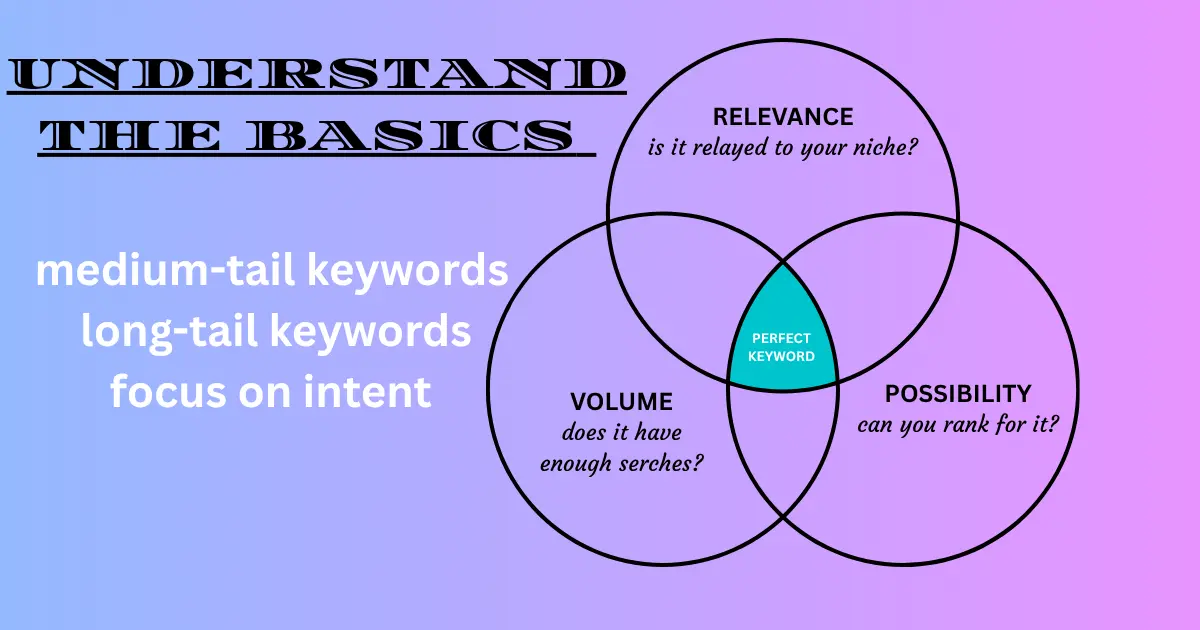
Step 3: Focus on Long‑Tail Keywords
Long‑tail keywords are longer, more specific phrases. They are easier to rank for than short, broad keywords.
Examples:
- Short keyword: “SEO” (too broad).
- Long‑tail keyword: “SEO basics for beginners” (specific and easier to rank).
Beginner tip: Aim for keywords with 3–5 words.
Step 4: Check Search Volume and Competition
Not all keywords are equal. You want keywords with:
- Good search volume: Enough people are searching for it.
- Low competition: Easier for beginners to rank.
Beginner tip: Tools like Ubersuggest show both search volume and competition scores.
Step 5: Understand Search Intent
Search intent means the reason behind a search.
Types of intent:
- Informational: “How to bake a cake” (looking for knowledge).
- Navigational: “Facebook login” (looking for a site).
- Transactional: “Buy running shoes online” (ready to purchase).
Beginner tip: For blogs, focus on informational keywords.
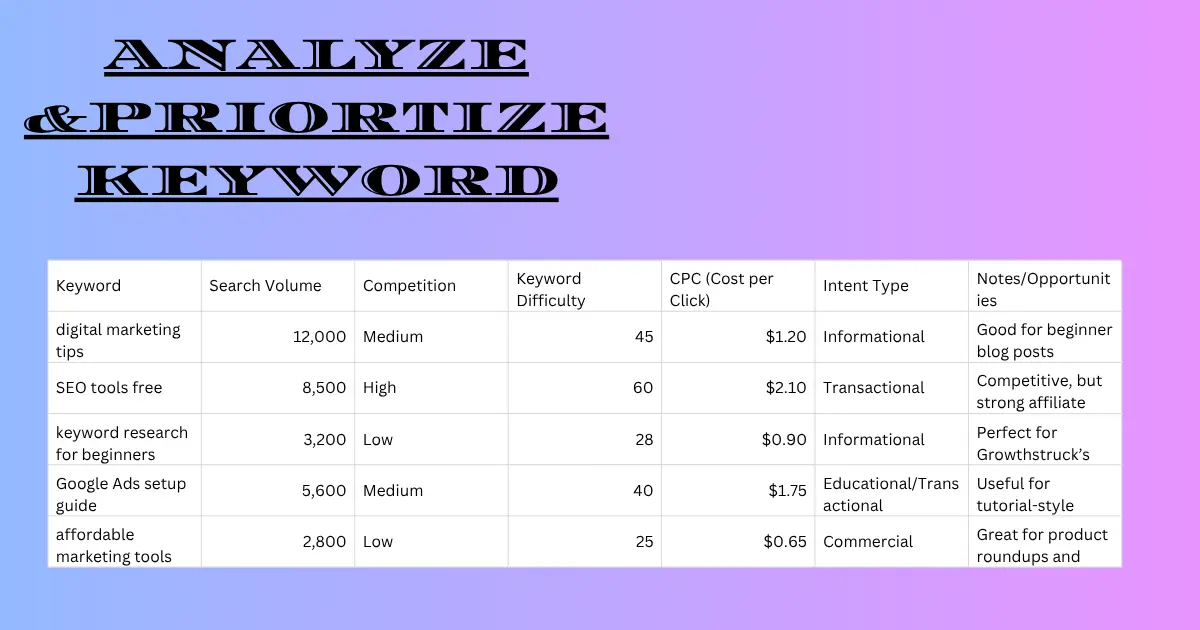
Step 6: Organize Your Keywords
Create a simple spreadsheet with columns:
- Keyword
- Search volume
- Competition
- Intent
Beginner tip: Group keywords by topic. This helps you plan blog posts.

Step 7: Use Keywords Naturally
Once you have keywords, use them in your blog:
- Title
- Headings
- First paragraph
- Meta description
- Image alt text
Beginner tip: Don’t stuff keywords. Write naturally. Google rewards helpful content.
Example Keyword Research
Let’s say you run a blog about digital marketing for beginners.
- Topic: “Email marketing.”
- Keyword ideas:
- “Beginner email campaign tips”
- “How to write a welcome email”
- Search volume: Moderate.
- Competition: Low to medium.
- Intent: Informational.
Blog title: “Email Marketing for Beginners: Building Your First Campaign That Converts.”
This keyword is specific, beginner‑friendly, and matches what people search for.
Step 8: Track and Update
Keyword trends change. Track your blog performance with tools like Google Analytics and Google Search Console.
- See which keywords bring traffic.
- Update old posts with fresh keywords.
- Add new content based on trending searches.
Beginner tip: Review your keywords every 3–6 months.
Quick Action Plan for Beginners
- Brainstorm 5–10 topics.
- Use Google Search Suggestions to find keywords.
- Pick long‑tail keywords with low competition.
- Write blog posts using those keywords naturally.
- Track performance and update regularly.
Keyword ressearch is the foundation of blog growth. It helps you understand your audience, create relevant content, and rank on Google.
As a beginner, focus on simple steps: brainstorm topics, use free tools, choose long‑tail keywords, and write naturally. Over time, you’ll see your blog attract more readers and build authority.
Remember: keywords are not about tricking Google. They’re about connecting with people who need your content.
More from our blog
See all posts