
How to Create Your First Social Media Marketing Strategy Without Experience ?
- June 19, 2026
- Uncategorized
Starting your first social media marketing strategy can feel overwhelming- and introduction to social media marketing. You see brands posting daily, influencers growing fast, and wonder how they do it. The truth is, every successful social media marketer started somewhere — usually with zero experience.
This guide will walk you through the process step by step, using plain language and practical examples. By the end, you’ll know exactly how to plan, create, and grow your social media presence.

Step 1: Set Clear Goals
Before you post anything, decide what you want to achieve. Social media isn’t just about likes and followers — it’s about building relationships and achieving business results.
Ask yourself:
- Do I want to increase brand awareness?
- Do I want to drive traffic to my website?
- Do I want to generate leads or sales?
- Do I want to build a community around my brand?
For example, if you’re a small business owner, your goal might be:
“Get 500 followers in three months and drive 200 visitors to my website monthly.”
Once you have clear goals, you can measure your progress and stay focused.
Step 2: Know Your Audience
You can’t create effective content if you don’t know who you’re talking to.
Think about your ideal follower:
- What age group are they in?
- What problems do they want solved?
- What kind of content do they enjoy — videos, tips, memes, or tutorials?
If you’re targeting beginners in digital marketing, for example, your audience might be young professionals or students who want to learn marketing skills to grow their careers.
Tip: Use free tools like Google Trends, Instagram Insights, or Facebook Audience Manager to understand what your audience likes and when they’re most active.
Step 3: Choose the Right Platforms
You don’t need to be everywhere. Focus on the platforms where your audience spends the most time.
Here’s a quick guide:
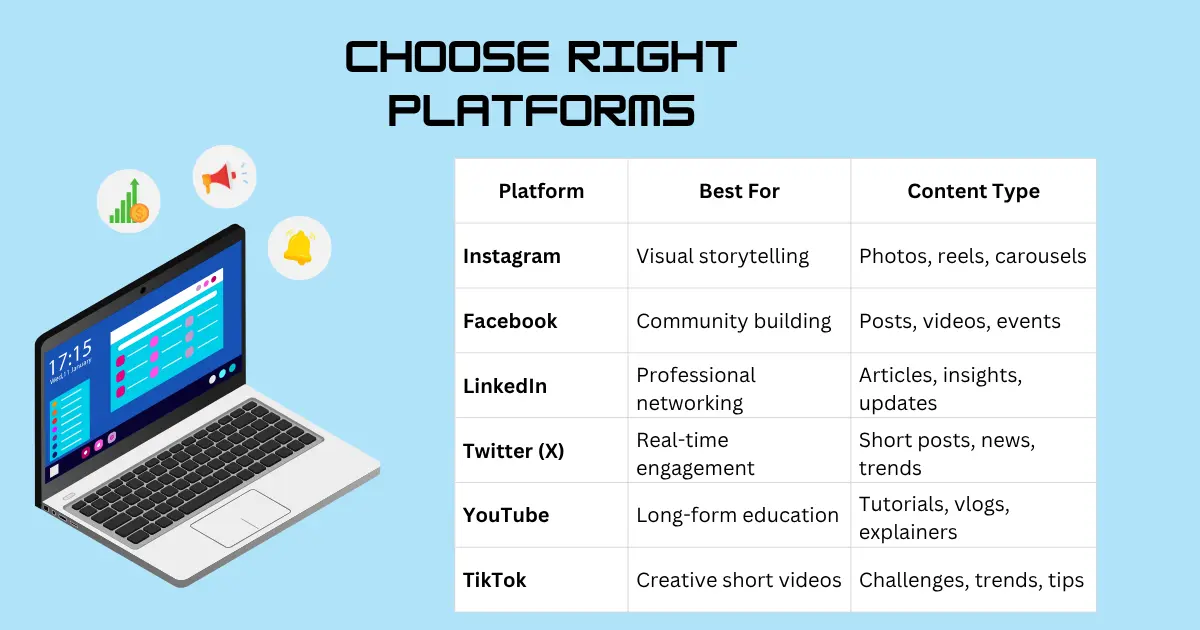
| Platform | Best For | Content Type |
| Visual storytelling | Photos, reels, carousels | |
| Community building | Posts, videos, events | |
| Professional networking | Articles, insights, updates | |
| Twitter (X) | Real-time engagement | Short posts, news, trends |
| YouTube | Long-form education | Tutorials, vlogs, explainers |
| TikTok | Creative short videos | Challenges, trends, tips |
If you’re new, start with one or two platforms. It’s better to do well on a few than struggle to manage all.
Step 4: Create a Content Plan
A content plan helps you stay consistent and organized.
Here’s how to build one:
- Pick your content themes — e.g., tips, behind-the-scenes, product updates, customer stories.
- Decide your posting frequency — start with 3–4 posts per week.
- Use a content calendar — plan posts ahead using tools like Trello, Notion, or Google Sheets.
- Mix formats — combine images, videos, stories, and polls to keep things fresh.
Example weekly plan:
| Day | Content Type | Example |
| Monday | Educational | “5 SEO Tips for Beginners” |
| Wednesday | Behind-the-scenes | “How We Plan Our Blog Posts” |
| Friday | Interactive | “Poll: What’s Your Favorite Marketing Tool?” |
| Sunday | Inspirational | “Quote about growth and learning” |
Step 5: Design Engaging Content
You don’t need to be a designer to create beautiful posts. Free tools like Canva and Adobe Express make it easy.
Tips for beginners:
- Use bright, consistent colors that match your brand.
- Add clear text overlays for quotes or tips.
- Include your logo or website name subtly.
- Keep visuals simple — cluttered designs confuse viewers.
Remember, visuals catch attention, but captions build connection. Write captions that sound human — friendly, conversational, and authentic.
Example caption:
“Starting your marketing journey? Don’t worry — every expert was once a beginner. Here’s how to take your first step ”
Step 6: Post Consistently and Engage
Consistency is key. Posting regularly helps your audience remember you and builds trust over time.
But don’t just post — engage:
- Reply to comments and messages.
- Like and share relevant posts from others.
- Ask questions in your captions to start conversations.
Social media is a two-way street. The more you interact, the more your followers will feel connected to you.
Example engagement caption:
“What’s one marketing skill you want to learn this month? Tell me below — I might write a post about it!”
Step 7: Track Your Results
You can’t improve what you don’t measure.
Use built-in analytics tools on each platform to track:
- Follower growth
- Post reach and impressions
- Engagement rate (likes, comments, shares)
- Website clicks
If your goal was to get 500 followers in three months, check your progress weekly. If you’re not growing, experiment — try new content types, post at different times, or use trending hashtags.
Pro Tip: Tools like Buffer, Hootsuite, or Later can help you schedule posts and analyze performance easily.
Step 8: Learn and Adapt
Social media changes fast. What works today might not work next month.
Stay updated by:
- Following marketing blogs (like Growthstruck!)
- Watching YouTube tutorials
- Joining online communities or Facebook groups
- Experimenting with new features — reels, stories, polls, etc.
Don’t be afraid to make mistakes. Every post teaches you something new.
Step 9: Use Hashtags Wisely
Hashtags help new people discover your content.
For beginners:
- Use 3–5 relevant hashtags per post.
- Mix popular and niche hashtags.
- Avoid random or spammy tags.
Example for a beginner marketing post:
#DigitalMarketingTips #SocialMediaForBeginners #MarketingStrategy #Growthstruck #LearnMarketing
Step 10: Be Authentic
People connect with people — not perfect brands.
Share your journey, your challenges, and your wins. Show the human side of your brand. Authenticity builds trust faster than any ad campaign.
Example:
“When I started posting, I had no idea what I was doing. But every week, I learned something new — and now I’m helping others do the same.”
Creating your first social media marketing strategy doesn’t require experience — just curiosity, consistency, and a willingness to learn.
Start small:
- Set clear goals.
- Know your audience.
- Choose the right platforms.
- Create and post consistently.
- Track your progress and keep improving.
Social media success doesn’t happen overnight, but with patience and creativity, you’ll see results. Remember — every expert was once a beginner.
So open that app, write your first post, and start your journey today. Growthstruck is here to guide you every step of the way.
More from our blog
See all posts