What is generative engine optimization (geo) ?: The Future of SEO in 2026
- June 26, 2026
- Uncategorized
Generative Engine Optimization: The New SEO Strategy for AI Search
Search is changing fast. For a time, businesses tried to rank high on Google using Search Engine Optimization. Now people also use AI tools like ChatGPT and Google AI to find answers.
These tools do not just show a list of links to websites. They give answers. This change is a challenge for marketers and website owners. They need to optimize their content not only for search engines but also for AI responses.
This new approach is called Generative Engine Optimization.
If you want your website to stay visible, understanding GEO is important. In this guide, you will learn what GEO is, how it works, and how you can optimize your content for AI search.
What is Generative Engine Optimization?
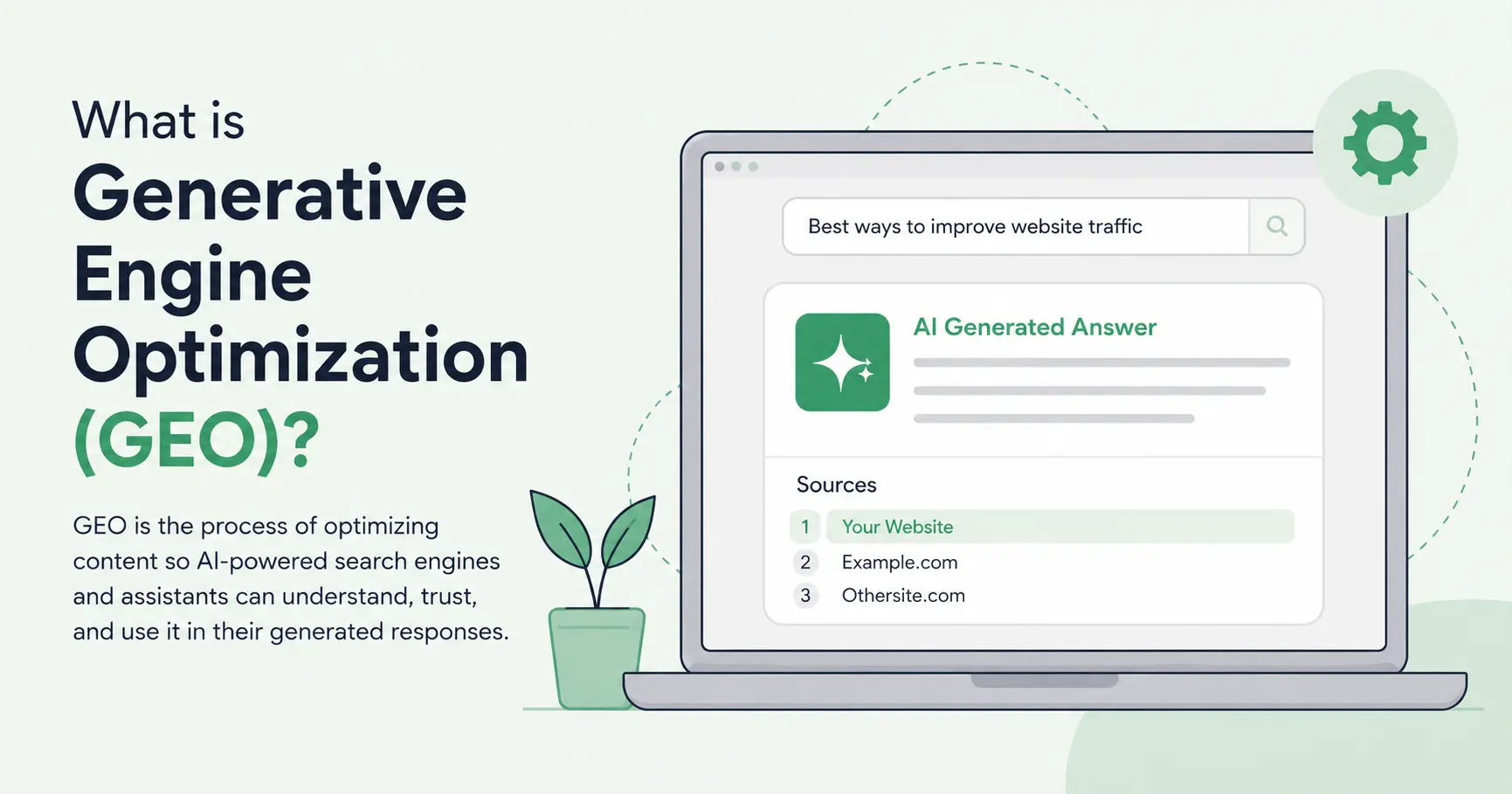
Generative Engine Optimization is the process of creating and optimizing content so that AI search engines can easily understand and use it.
Traditional SEO is about getting your page to rank higher in search results.
GEO is about helping AI systems choose your content as a trusted source when answering users' questions.
For example, a user asks,
"What is the best way to improve website traffic?"
An AI assistant may generate an answer by collecting information from trusted websites.
If your article has accurate information, the AI is more likely to use it.
That is the goal of Generative Engine Optimization.
Why GEO Matters
AI search is growing fast. Millions of people now ask AI assistants questions instead of typing traditional search queries.
People like AI search because it gives answers, summarizes complex topics, saves time, and provides conversational responses.
As this trend continues, businesses that only focus on SEO may lose traffic.
By using GEO, you increase the chances that AI systems will reference your content or direct users to your website.
GEO helps your content stay visible as search evolves.
GEO vs SEO: What's the Difference?
GEO and SEO have goals.
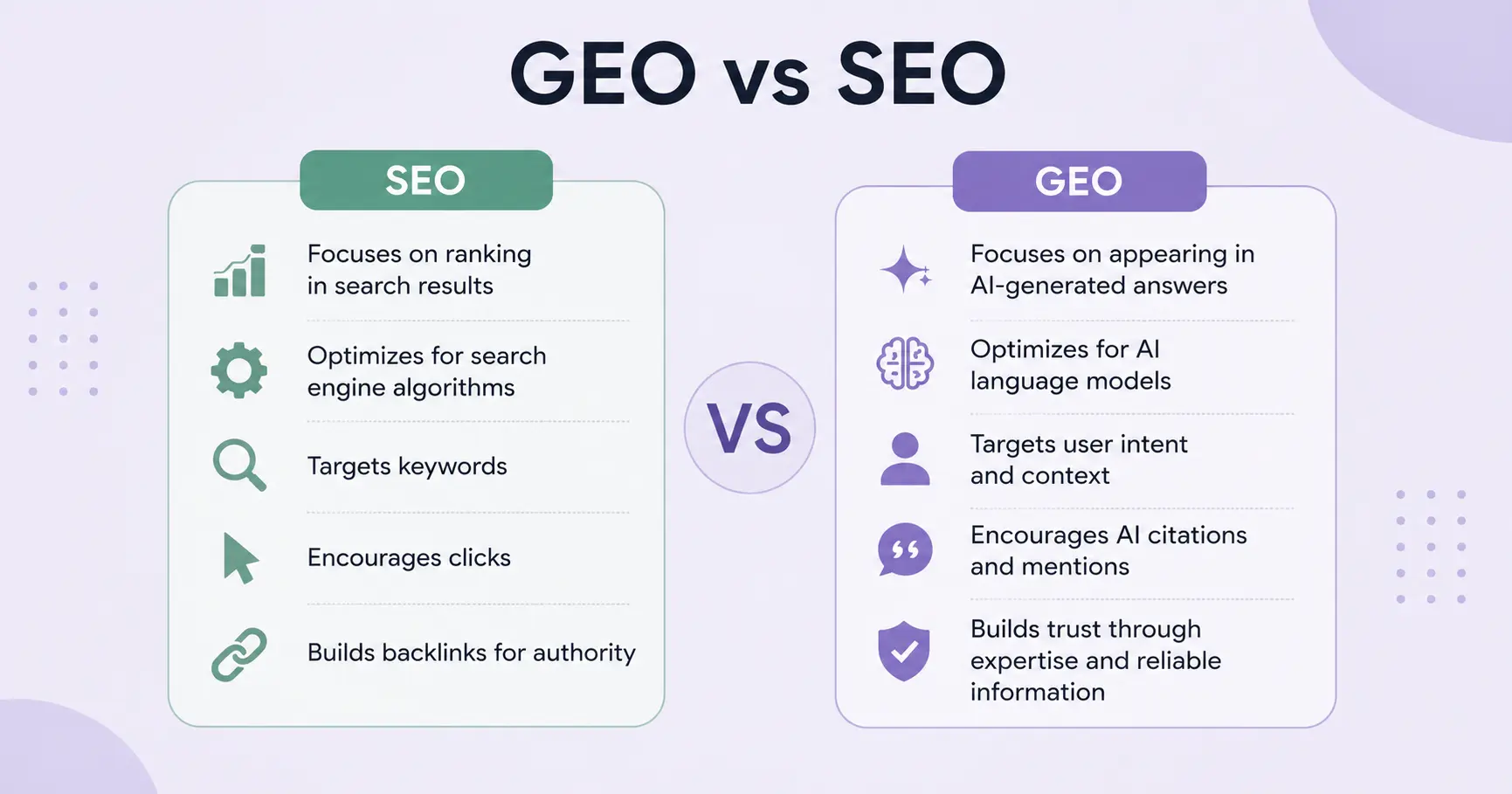
SEO focuses on ranking in search results and targets keywords.
GEO focuses on appearing in AI-generated answers and targets user intent and context.
The good news is that GEO does not replace SEO.
GEO builds on SEO practices and prepares your content for AI-driven search experiences.
How AI Search Engines Choose Content
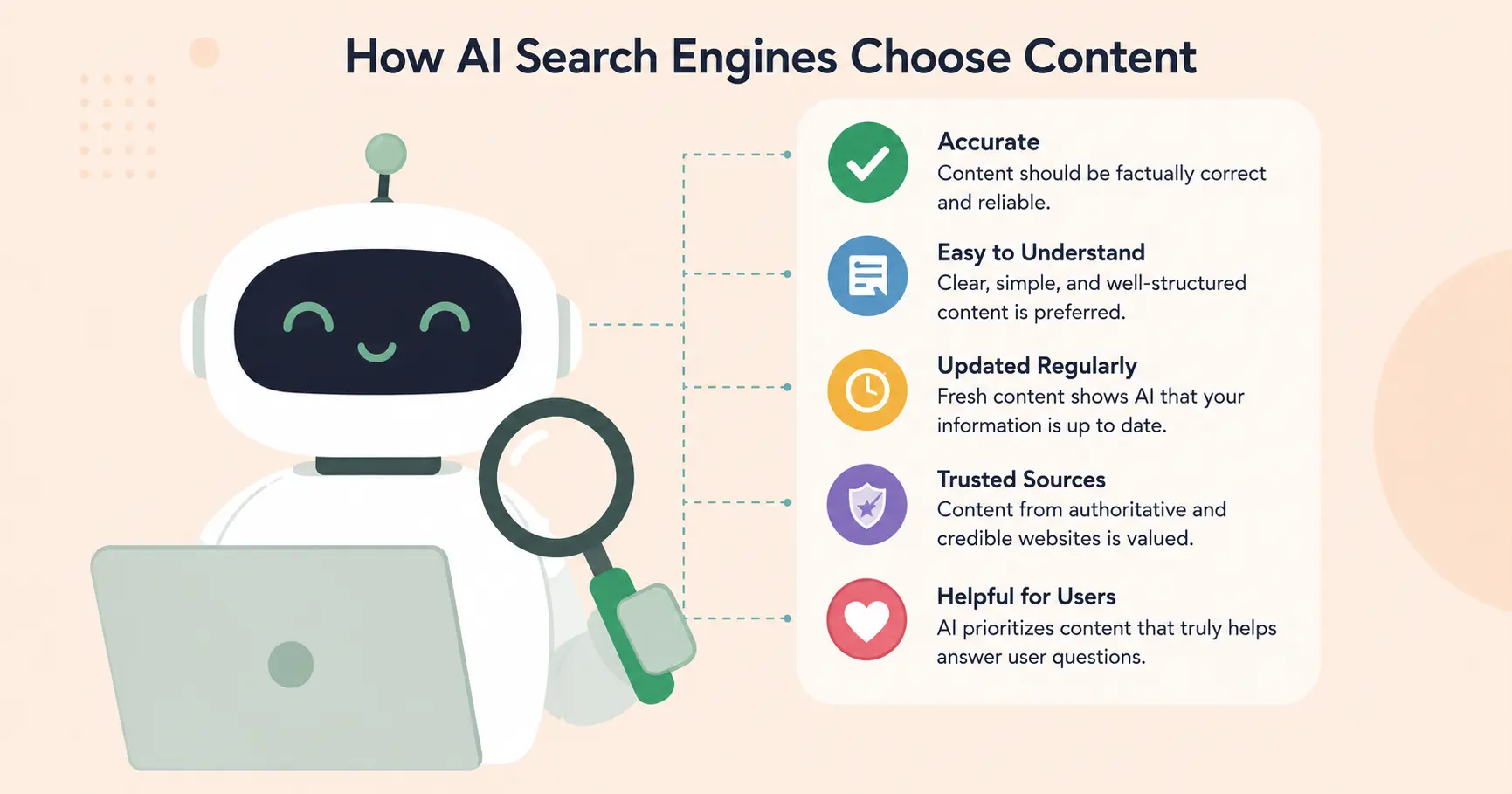
AI systems analyze large amounts of information and look for content that is accurate, easy to understand, and well-organized.
Content that explains topics clearly has a chance of appearing in AI-generated responses.
This is why writing naturally has become more important than stuffing keywords into every paragraph.
How to Make Your Content Better for GEO
Here are some tips to make your content better for AI search.
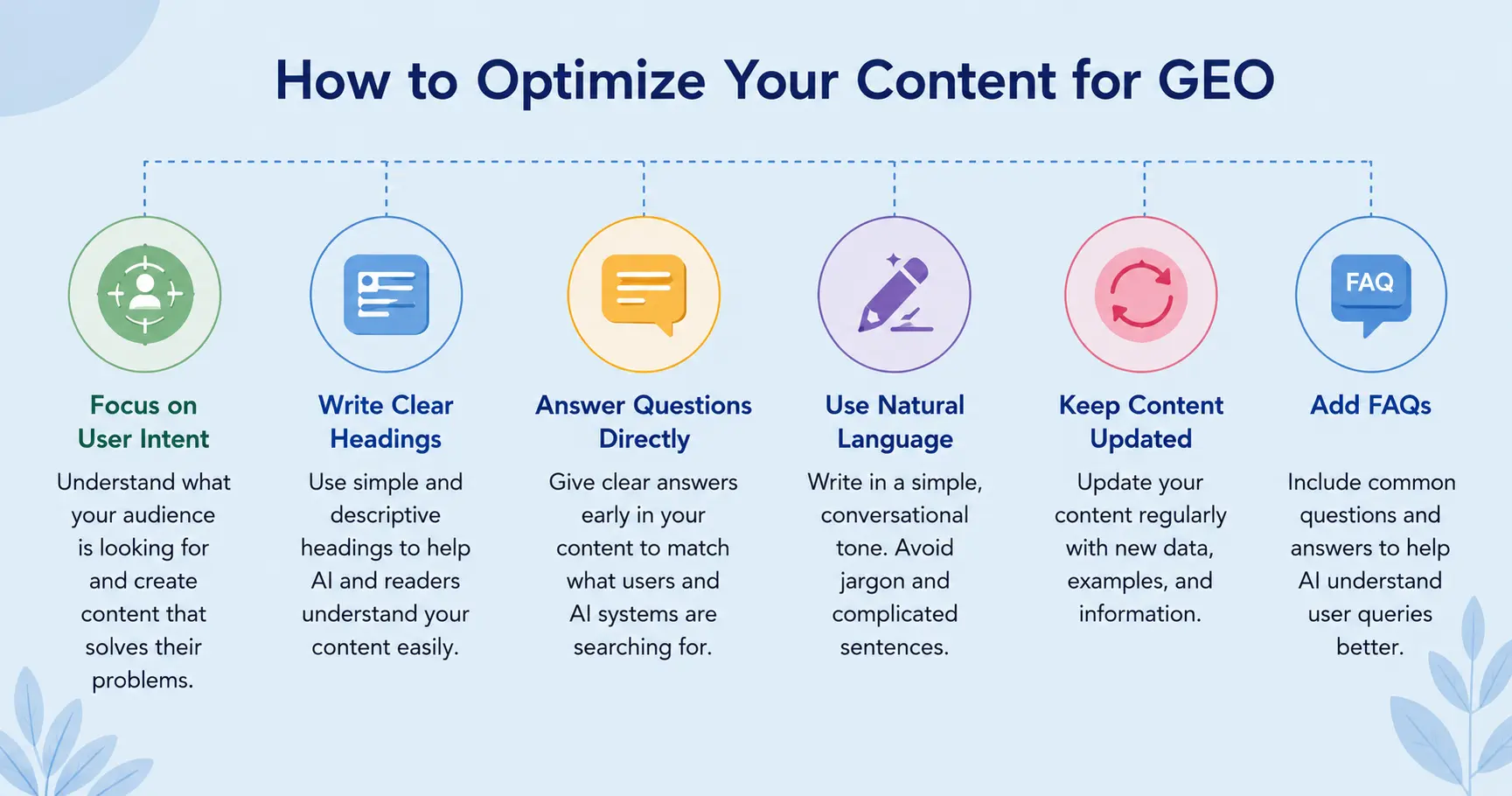
1. Think About What Your Reader Wants
Before you start writing, ask yourself some questions.
What is the reader trying to find out?
What problem are they trying to solve?
What information can you give them to help?
Write your article to help the reader not to use certain keywords.
When your content answers questions, it is easier for search engines and AI assistants to understand.
2. Use Simple Headings
Use headings that explain what each section is about.
For example:
✔ What is GEO?
✔ Why GEO is Important
✔ Benefits of GEO
✔ Common Mistakes with GEO
AI systems can understand your content better when it is well-organized.
3. Answer Questions Straight Away
Many AI systems like content that gives answers.
Do not write an introduction; answer the important questions first.
For example:
Question: What's GEO?
Answer: GEO is a way to make your content better so AI search engines can understand it.
Simple answers make your content easier to read and more likely to appear in AI summaries.
4. Write
Do not write just for search engines.
Write like you are explaining something to someone who does not know about it.
For example:
❌ "GEO uses optimization to help AI search engines."
✔ "GEO helps AI search engines understand your content better."
Writing simply makes your content better for your readers. Helps AI understand it.
5. Be an Expert in Your Topic
Writing one article is not enough.
Write articles about the same topic.
For example, if you write about marketing, you can write about:
* SEO basics
* Content marketing
* Keyword research
* AI marketing
* Email marketing
* media marketing
When your website has a lot of information about a topic, search engines and AI systems think it is a reliable source.
6. Keep Your Content Up to Date
AI systems like accurate information.
Update your blogs regularly by:
* Adding numbers and statistics
* Updating pictures and screenshots
* Including tools and information
* Removing old information that is not relevant
Regular updates make your SEO and GEO better.
7. Add Asked Questions
Frequently Asked Questions help AI understand what people are asking.
For example:
What is GEO?
GEO helps AI search engines understand and recommend your content.
Is GEO replacing SEO?
No GEO works with SEO.
Can small websites use GEO?
Yes, good content can do well even if the website is small.
8. Make Your Content Easy to Read
People like to read content that's easy to scan.
Use:
* Short paragraphs
* Bullet points
* Clear headings
* Simple words
* Examples
Making your content easy to read keeps people interested. Makes them trust you.
Common Mistakes with GEO
people who are new to this make these mistakes.
Using Many Keywords
Do not repeat the same keyword too many times.
Instead, write naturally.
Publishing Thin Content
Short articles with information do not do well.
Create content that answers the reader's question.
Ignoring Your Reader
A website or a bad mobile experience can make people leave.
Make your website faster and work well on mobile devices.
Using Old Information
Digital marketing changes fast.
Review articles and update them regularly.
Best Ways to Do GEO
To make your AI visibility better, follow these steps:
Write original content.
Use voice.
Add examples.
Include numbers and statistics when relevant.
Answer questions.
Use headings.
Cover the topic completely.
Keep paragraphs
Add links to articles.
Link to trusted sources when necessary.
Update content regularly.
These habits help both readers and AI systems understand your content better.
The Future of GEO
Generative AI will keep changing how people search online.
After looking at many websites, people want quick and easy answers. Businesses that adapt to this change will do better.
This does not mean websites will disappear. People will still visit websites to read guides, compare products, and make informed decisions.
However, AI will play a role in helping people find trustworthy content.
That makes GEO an important part of every digital marketing strategy.
GEO is changing the future of search. While traditional SEO is still important, it is not enough on its own.
By creating helpful and trustworthy content, you can do better in search engine results and AI-generated answers. Focus on solving your audience's problems, and organize your content well. Keep your information up-to-date.
As AI search becomes more common, businesses that invest in GEO now will be better prepared for the digital landscape.
Start using these strategies, and you will build a stronger online presence that helps both your readers and your search visibility.
- AEO, ai, digital marketing, GEO, SEO
More from our blog
See all posts